
Home Care for Dementia: Mealtime Help and Nutrition Tips
Written by the HomeCare editorial team. Sources: Alzheimer's Association, National Institute on Aging (NIA).
Mealtimes are about far more than food. They are a rhythm in the day, a time to sit together, a familiar pleasure, and a way for your parent to stay strong and well. When dementia changes appetite, memory, or the ability to use cutlery, mealtimes can become a source of worry. Your parent may forget to eat, refuse food, eat very slowly, or lose weight. You may worry that they are not eating enough, or that they are not drinking enough water. This guide offers simple, practical ideas for mealtimes at home, with safety, dignity, and pleasure in mind.
The ideas here are general information, not a diet plan for any individual person. If your parent has a medical condition, allergies, or difficulty swallowing, or if you are worried about weight loss, appetite, or dehydration, talk to a doctor or a dietitian. Do not start a special diet, or change how food and drink are prepared, without professional advice. What this guide can do is help you make ordinary mealtimes calmer, easier, and more enjoyable, day by day. For the wider picture, read our complete family guide to dementia care at home and our daily routine guide for families.
Why Mealtimes Change
Dementia can change eating in many ways. Your parent may forget that they have eaten, or forget to eat at all. They may forget how to use a knife and fork, or how to start a meal. They may lose interest in food, or become fussy about foods they once enjoyed. Taste and smell can change, and a meal that once tasted good may now taste dull or strange. Your parent may also become distracted at the table, or find a busy table with many dishes overwhelming.
Other changes can affect eating too. Pain, tiredness, a sore mouth, poorly fitting dentures, or feeling unwell can all reduce appetite. So can loneliness: eating alone, in silence, is far less appealing than eating with company. A person who eats well with family may eat very little alone. Understanding why eating has changed is the first step to helping. Watch, over a few days, when your parent eats best, what foods they enjoy, and what makes a meal harder. Those notes are useful for a doctor too, if you need to talk about appetite or weight.
A Calm Table
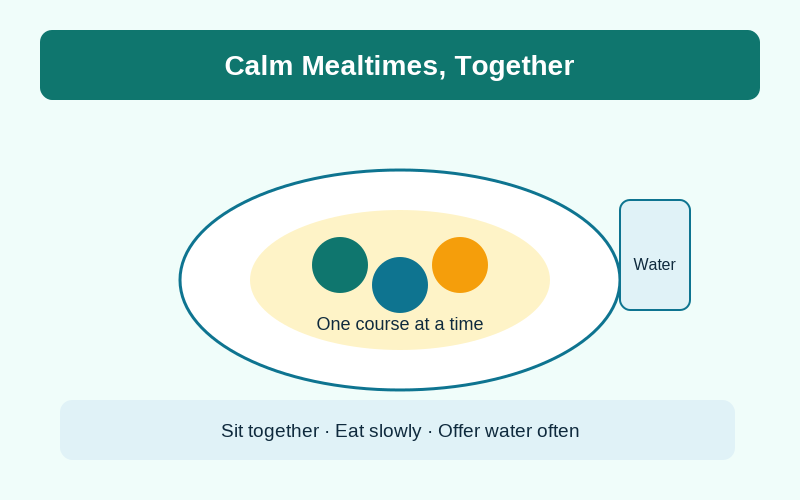
Start with the table itself. Eat at the same table, at the same times each day, in a calm room. Turn off the television, or keep it very low, because background noise can distract your parent and make it harder to focus on eating. Keep the table uncluttered: a plate, a cup, and cutlery are enough. Too many dishes, condiments, and objects can be confusing, and your parent may not know where to start.
Sit with your parent, and eat together. Eating is a social activity, and company can improve appetite. Eat slowly, talk gently, and allow plenty of time. Do not rush the meal to fit the next task. Use a plate in a colour that contrasts with the food, so the food is easy to see — a light plate for dark food, or a coloured plate for light food. A plain plate, without a busy pattern, is easier to read than a patterned one. Keep the lighting good, so your parent can see the plate clearly, and make sure glasses or a hearing aid are in place, if your parent uses them.
Simple, Familiar Meals
Keep meals simple and familiar. Your parent is more likely to eat a meal they recognise, and enjoy, than a new dish with unfamiliar flavours. Favourite meals from the past, prepared in a familiar way, can be comforting. Offer one course at a time, rather than putting everything on the table at once. A main course, followed by a simple dessert, is easier to follow than a table full of dishes.
Think about balance, not perfection. Regular meals with a mix of foods — some protein, some vegetables or fruit, some bread, rice, or potatoes — support strength and health. Small portions are often better than large ones, because a large plate can feel overwhelming. Your parent can always ask for more. If a meal is refused, do not make it a battle. Offer it again a little later, or offer a simpler alternative. A small snack, a bowl of soup, or a favourite food is better than no food at all, and far better than a long argument at the table.
Helping Your Parent to Eat
If your parent forgets how to use cutlery, offer finger foods without making a fuss about it. Sandwiches cut into small pieces, pieces of fruit, cheese, cooked vegetables, or small cakes can be eaten by hand, and they allow your parent to keep eating independently. Use cutlery with large, easy-to-hold handles if that helps, and a cup with two handles or a light mug that is easy to lift. A non-slip mat under the plate can stop it sliding, and a plate with a raised edge can make it easier to scoop food.
Give gentle, simple prompts, one step at a time. "Here is your soup" and then, a little later, "Would you like some bread?" is easier than a long instruction. If your parent stops eating, check whether they are tired, distracted, or simply finished. Offer a drink, and then, if they are willing, gently encourage them to continue. Praise the effort, not the amount eaten. If you need to help directly, explain what you are doing, ask permission, and go slowly. Feeding another adult is a sensitive task, and it deserves patience and respect. Our guide to communicating with calm and patience has ideas for keeping these moments kind.
Hydration: Water Through the Day
Drinking enough water is just as important as eating, and it is easy to forget. A person with dementia may forget to drink, may not feel thirsty, or may avoid drinking because they worry about needing the toilet at night. Dehydration can make confusion worse, and it can cause tiredness, headaches, and constipation. Offer water regularly through the day, not only at mealtimes. Keep a glass or bottle of water within reach, where your parent can see it, and offer a drink often, in a gentle way.
Make drinking pleasant. A favourite cup, a glass with a straw, a warm drink in the morning, and a cool drink in the afternoon can all help. Offer water, milk, diluted juice, or a warm drink, according to what your parent enjoys. Soup, fruit, and jelly can also add fluid, but they are not a substitute for regular drinks. If your parent drinks very little, or if you notice signs that worry you — unusual tiredness, dark urine, dry mouth, or more confusion than usual — talk to a doctor promptly. Do not try to force large amounts of water at once. Small, regular drinks through the day are safer and easier.
When Appetite Falls
A falling appetite is common, and it can be worrying. Start by looking for simple causes. Is your parent in pain, tired, unwell, or constipated? Is the food too hot, too cold, or hard to chew? Is the room too noisy, or is your parent distracted? Is the meal too large, or served at a time when your parent is not hungry? Small changes — a smaller plate, a quieter room, a favourite food, a different time — can sometimes make a real difference.
Offer food little and often, rather than three large meals that feel overwhelming. A small breakfast, a mid-morning snack, a light lunch, an afternoon snack, and a simple dinner can add up to enough food through the day. Keep snacks visible and within reach: a bowl of fruit, a few biscuits, or a small sandwich. If your parent enjoys sweet foods, offer them as part of a meal, rather than instead of it. If appetite falls suddenly, or if your parent refuses food and drink for a day, talk to a doctor promptly, because a sudden change can have a medical cause.
Safe Eating Habits
Safety at mealtimes matters. Make sure your parent is sitting upright, in a comfortable chair, with feet on the floor, before eating or drinking. Do not offer food or drink when your parent is lying down, drowsy, or coughing. Allow plenty of time, and do not rush. Cut food into small, manageable pieces, and remove bones, stones, and anything that could be a choking risk. Check that food is not too hot, and that drinks are at a comfortable temperature.
Watch for signs that eating or drinking is becoming difficult: coughing or choking during meals, food staying in the mouth, a wet or gurgly voice after swallowing, or repeated chest infections. If you notice any of these, talk to a doctor promptly, and ask for a referral to a speech and language therapist or a dietitian, if that is available. Do not change the texture of food or drink, or use thickened drinks, without professional advice. Keep a note of what happens at mealtimes, so you can describe it clearly to a doctor. Our guide to safe bathing and personal care covers other daily safety routines at home.
Shopping and Cooking Together
Involving your parent in shopping and cooking can improve appetite, because it makes food familiar and interesting again. Ask your parent to help with a simple task: stirring a pot, washing vegetables, setting the table, or choosing between two foods at the shop. Keep the task short, offer one step at a time, and praise the effort. If shopping is tiring, do a short shop together, or look at a shopping list at home and talk about what to buy.
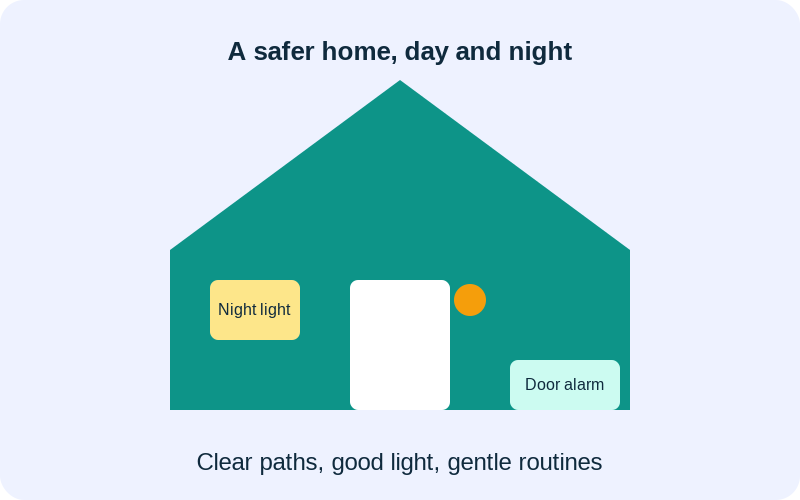
Keep the kitchen safe. Store cleaning products out of reach, keep knives in a drawer rather than a block, and consider a stove shut-off device or removing knobs when the stove is not in use. Label cupboards with words or pictures — "cups", "plates", "tea" — so your parent can find things without opening every door. Our complete family guide has a room-by-room home safety section, and our guide to creating a calm and familiar home has more ideas for a kitchen that is easy to use.
Weight Changes to Watch
Weight loss is a common worry, and it deserves attention. Weigh your parent regularly, if you can, at the same time of day and in the same clothes, and keep a simple record. A small, gradual loss may be part of ageing, but a sudden or steady loss, or clothes that become loose quickly, should be discussed with a doctor. Do not try to solve weight loss by offering large amounts of rich food, or by changing the diet, without professional advice.
Weight gain can also happen, especially if your parent eats sweet foods often, or moves less than before. Again, talk to a doctor before making changes. A doctor or dietitian can look at the whole picture — appetite, activity, medicines, and health — and advise on what is right for your parent. Your job at home is to offer regular, balanced, familiar meals, to keep water within reach, and to notice changes early, so you can raise them promptly.
Mealtimes in the Daily Routine
Mealtimes work best as part of a steady day, not as isolated tasks. Breakfast, lunch, and dinner at the same times, at the same table, give the day a rhythm that your parent can rely on. A short walk before lunch can improve appetite, and a calm afternoon can make dinner easier. A warm drink in the evening, and a light snack before bed, can help your parent settle for the night. Our guide to daily routine shows how mealtimes fit into the whole day.
Keep a simple mealtime note for a week: what was eaten, what was enjoyed, what was refused, and how much was drunk. That note can show patterns you might otherwise miss — for example, that your parent eats better at lunch than at dinner, or enjoys soup more than a large meal. Share the note with other family members, and with a professional caregiver, so everyone offers food in the same calm way. If you would like help planning care, you can contact our team or read more about who we are and how we work.
Frequently Asked Questions
What if my parent refuses to eat? Do not make it a battle. Offer a smaller portion, a favourite food, or a simple snack, and try again a little later. If refusal continues, or if your parent refuses food and drink for a day, talk to a doctor promptly.
How can I help my parent drink more water? Offer small drinks often through the day, keep water within reach and visible, and use a favourite cup or glass. Soup, fruit, and warm drinks can also help, but they are not a substitute for regular drinks.
What are good finger foods? Sandwiches cut into small pieces, pieces of fruit, cheese, cooked vegetables, and small cakes can all work. Finger foods allow your parent to keep eating independently, without having to use cutlery.
When should I worry about weight loss? Talk to a doctor if weight loss is sudden, steady, or if clothes become loose quickly. Keep a simple record of weight, appetite, and what is eaten, so you can describe the change clearly.
What if my parent coughs when eating or drinking? Talk to a doctor promptly, and ask for advice from a speech and language therapist or dietitian if available. Do not change the texture of food or drink without professional advice.
Sources and Further Reading
This guide draws on the following sources, all accessed 29 November 2026.
- Alzheimer's Association — Facts and Figures, and information on dementia care at home. alz.org/alzheimers-dementia/facts-figures
- National Institute on Aging (NIA) — information on Alzheimer's disease, dementia, and caregiving. nia.nih.gov/health/alzheimers-and-dementia
If this guide helped you, please share it with another family who needs it, and read our other guides on dementia care at home. If you would like to talk about care for your parent, start on our homepage or contact us — a friendly advisor is ready to listen, with no obligation. You can write to us at hello@homecare.biz.id.
Tags: dementia home care, senior nutrition, family caregiver
Last reviewed: 23 June 2026. This guide is general information and is reviewed regularly. It is not a substitute for medical advice. Always talk to a doctor about diagnosis, treatment, or any change to care or medication.