
Home Care for Dementia: Safe Bathing and Personal Care Guide
Written by the HomeCare editorial team. Sources: Alzheimer's Association, National Institute on Aging (NIA).
Bathing and personal care are among the most sensitive parts of caring for a parent with dementia at home. The bathroom is cold, slippery, and private, and being helped to wash can feel humiliating, frightening, or confusing. Your parent may refuse a bath, become upset, or say they have already washed when they have not. You may feel embarrassed, frustrated, or worried about safety. This guide offers a step-by-step approach that puts dignity, comfort, and safety first, and helps you find a routine that works for your parent and for you.
Personal care is not only about cleanliness. It is about comfort, health, and self-respect. Clean skin, clean teeth, comfortable clothes, and a warm bath can improve mood, help sleep, and prevent skin problems. The way care is given matters as much as the care itself: slowly, privately, with choice where possible, and without rushing. If skin, pain, or fear is part of the problem, talk to a doctor or nurse, rather than struggling alone. For the wider picture, read our complete family guide to dementia care at home and our daily routine guide for families.
Why Bathing Is Hard
It helps to understand why bathing is often the hardest daily task. Your parent may not remember how to bath, or in what order to do things. They may be frightened by water, by the sound of a shower, or by stepping into a bath. They may feel cold, or worry about falling. They may feel embarrassed about being seen without clothes, or about being helped by their own child. They may also simply not understand why a bath is needed, especially if they believe they have already washed.
None of these reasons means your parent is being difficult on purpose. They are responding to confusion, fear, tiredness, or discomfort, in the only way they can. Keeping that in mind changes how you respond. The goal is not to win an argument about bathing, but to make bathing feel safe, warm, and private, so your parent is willing to accept help. Small changes — a warmer room, a different time of day, a familiar caregiver, a sponge wash instead of a shower — can make a surprising difference.
Dignity First
Dignity is the first rule of personal care. Always explain what you are doing, in simple terms, and ask permission before you help. "I am going to help you wash your back, is that all right?" is kinder than starting without a word. Keep your parent covered as much as possible, with a towel or a robe, and expose only the part of the body you are washing. Close the bathroom door, and make sure no one else walks in during personal care.
Talk to your parent as an adult, use their name, and never talk about them as if they are not in the room. Offer a choice where you can: "Shower or bath today?" "The blue towel or the white one?" A real choice, even a small one, protects dignity and gives your parent a sense of control. If your parent prefers a caregiver of the same gender, or a particular family member, respect that if you can. Our guide to communicating with calm and patience has more ideas for keeping personal care kind and respectful.
A Safe Bathroom
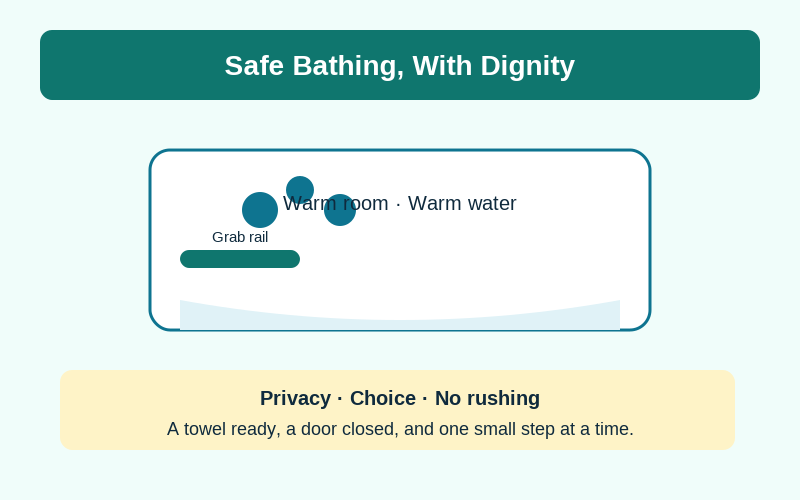
Make the bathroom safe before you start. Fit grab rails beside the toilet and in the shower or bath, use a non-slip mat and a shower chair, and keep the water temperature limited so it cannot scald. Check the water yourself before your parent steps in, and run the water before your parent gets in, so they do not have to wait in a cold room. Warm the room first, and have a towel ready, so your parent is never cold or exposed.
Keep the bathroom uncluttered and well lit. Store medicines, razors, and cleaning products in a locked cupboard, out of reach. Use a night light, so your parent can find the bathroom safely at night. A toilet seat in a contrasting colour is easier to see than a white one on a white floor. Keep a clear path to the bathroom, with nothing to trip over, and make sure the floor is dry. Our complete family guide has a room-by-room home safety section, and our guide to creating a calm and familiar home has more ideas for a safer bathroom.
Bathing, Step by Step
Break bathing into small steps, one at a time, and allow plenty of time. Start by preparing everything you need: towels, soap, shampoo, clean clothes, and a chair if needed. Tell your parent, in simple terms, what is happening: "It is time for a bath. The water is warm. I will help you." Help your parent undress slowly, keeping them covered with a towel, and help them step into the bath or shower with a hand to hold and a grab rail to use.
Wash one part of the body at a time, and explain each step. "Now I will wash your arm." Use a gentle touch, warm water, and familiar soap. Wash, rinse, and dry each part before moving on, so your parent is never cold. If your parent can wash part of themselves, encourage them to do so, and praise the effort. After bathing, help your parent dry thoroughly, especially in skin folds, and help them dress in clean, comfortable clothes. A warm drink afterwards can help your parent feel settled. If bathing takes a long time, that is fine. A calm, unhurried bath is far better than a quick, stressful one.
When Bathing Is Refused
Refusal is common, and it does not mean you have failed. If your parent refuses a bath, do not push it into a battle. Stay calm, acknowledge the feeling, and try again a little later. "I can see you do not want a bath now. Shall we try after lunch?" A different time of day can help: many people prefer a bath in the morning, when they are more alert, while others prefer the evening, when a warm bath can help them sleep. A different caregiver, or a different approach, can also help.
On difficult days, a sponge wash is a sensible compromise, not a failure. Wash your parent's face, hands, underarms, and private areas with a warm, damp cloth, in privacy, and change into clean clothes. That is enough for one day. You can also try making bathing more pleasant: a favourite soap, familiar music, a warm room, or a bath at the same time each day, so it becomes part of the routine. If refusal becomes frequent, or if your parent becomes distressed, talk to a doctor or nurse, because pain, fear, or a skin problem may be part of the reason. Keep a note of what happened, and what seemed to help.
Dressing with Ease
Dressing can be hard when memory, movement, or understanding have changed. Lay clothes out in the order they are put on, and choose clothes that are easy to fasten: front-opening tops, elastic waists, and shoes with a firm grip and a simple fastening. Offer a choice between two outfits, rather than asking an open question about what to wear. "The blue shirt or the green one?" is a real choice, and it is small enough not to overwhelm.
Help one step at a time, and allow your parent to do what they can. "Here is your shirt. Put your arm through here." Praise the effort, not the speed. If your parent puts clothes on in the wrong order, or inside out, correct it gently, without making a fuss. Keep the room warm, and make sure your parent is not rushed. If dressing becomes a daily battle, try a different time of day, or lay clothes out the night before, so the morning is calmer. Comfort matters more than appearance, and familiar clothes can be comforting in themselves.

Hair, Teeth, and Skin
Hair, teeth, and skin care are part of daily dignity, and they are easy to overlook when bathing is difficult. Brush your parent's hair gently each day, in a familiar style, and offer a shampoo when your parent is willing. If washing hair in the shower is hard, a wash at the sink, with a towel around the shoulders, can be easier. Keep nails short and clean, and check feet regularly for soreness, redness, or cuts, especially if your parent has difficulty walking or feeling pain.
Help with teeth or dentures morning and evening, if your parent is willing. Use a soft toothbrush, and keep the routine simple and calm. If your parent wears dentures, check that they fit comfortably, and clean them daily. A sore mouth, poorly fitting dentures, or tooth pain can reduce appetite, so talk to a dentist or doctor if you notice a problem. Skin care is covered in more detail below, but the basic rule is simple: keep skin clean, dry, and moisturised, and check it regularly for redness or soreness.
Toileting with Privacy
Toileting needs privacy, patience, and a calm routine. Help your parent to the toilet at regular times through the day, especially after meals and before bed, and make the route clear and safe, with a night light and a clear path. Use simple words, one step at a time, and allow plenty of time. Keep the bathroom door closed, and respect your parent's privacy as much as you can, while staying close enough to help if needed.
If accidents happen, stay calm and kind. Do not scold, and do not show disgust. Clean up quietly, change into clean clothes, and move on. Accidents are not your parent's fault, and shame makes them more likely, not less. If toileting becomes difficult, or if your parent seems to be in pain, constipated, or unable to pass urine, talk to a doctor promptly. Keep a simple note of toileting, appetite, and sleep, so you can describe any change clearly to a doctor or nurse.
Skin, Comfort, and Signs to Watch
Check your parent's skin regularly, especially in areas that stay warm and damp, and where skin touches skin. Look for redness, soreness, dryness, or breaks in the skin, and raise any concern with a doctor or nurse promptly. Keep skin clean and dry, and use a simple moisturiser if your parent's skin is dry, unless a doctor has advised otherwise. Change clothes and bedding regularly, and make sure your parent is not sitting or lying in one position for a long time.
Comfort matters in other ways too. Keep your parent warm, but not too hot, and check that clothes and shoes fit comfortably. Watch for signs of pain, which your parent may not be able to explain: restlessness, crying, refusal to eat, or a change in sleep. If you notice a change, talk to a doctor. A person who cannot explain pain may show it as distress, and that distress deserves medical attention, not only patience. You can read more about watching for changes in our complete family guide.
A Personal Care Routine That Works
A personal care routine works best when it is steady, simple, and shared. Keep washing, dressing, and toileting at roughly the same times each day, in the same order, so your parent knows what to expect. Write the routine down, and share it with other family members and with any professional caregiver, so everyone follows the same steps. Keep a short daily note — what was done, what went well, what was hard — so patterns become visible over time.
If personal care becomes too much for one person, ask for help. A professional caregiver with experience in dementia care can help with bathing and dressing, and can give you a break. That is not a failure. It is a sensible way to keep care safe and dignified, for your parent and for you. You can learn more about asking for help in our guide to when to ask for extra help at home, and about planning care in our complete guide to home care. If you would like to talk through a specific situation, you can contact our team or read more about who we are and how we work.
Frequently Asked Questions
How often should my parent bath or shower? There is no single rule. A full bath or shower a few times a week, with a sponge wash on other days, is enough for many people. A steady routine, at a time your parent prefers, matters more than bathing every day.
What if my parent refuses to bath? Do not turn it into a battle. Try again a little later, try a different time of day, or offer a sponge wash. If refusal becomes frequent, talk to a doctor or nurse, because pain, fear, or a skin problem may be part of the reason.
How can I make the bathroom safer? Fit grab rails, use a non-slip mat and a shower chair, limit the water temperature, warm the room first, and keep the floor dry. Store medicines and cleaning products in a locked cupboard.
What if I feel embarrassed helping my parent to wash? That feeling is normal, and it is shared by many family caregivers. Keep your parent covered as much as possible, explain each step, and ask for help from a professional caregiver if you need it. Dignity, for both of you, is the goal.
When should I ask a doctor about personal care? Talk to a doctor promptly if you notice skin redness or soreness, pain, difficulty swallowing, weight loss, or a sudden change in toileting, appetite, or sleep. Keep a short note, so you can describe the change clearly.
Sources and Further Reading
This guide draws on the following sources, all accessed 29 November 2026.
- Alzheimer's Association — Facts and Figures, and information on dementia care at home. alz.org/alzheimers-dementia/facts-figures
- National Institute on Aging (NIA) — information on Alzheimer's disease, dementia, and caregiving. nia.nih.gov/health/alzheimers-and-dementia
If this guide helped you, please share it with another family who needs it, and read our other guides on dementia care at home. If you would like to talk about care for your parent, start on our homepage or contact us — a friendly advisor is ready to listen, with no obligation. You can write to us at hello@homecare.biz.id.
Tags: dementia home care, senior personal care, home safety
Last reviewed: 23 June 2026. This guide is general information and is reviewed regularly. It is not a substitute for medical advice. Always talk to a doctor about diagnosis, treatment, or any change to care or medication.