
Home Care for Alzheimer Support: Nutrition and Hydration Guide
Written by the HomeCare editorial team. Sources: Alzheimer's Association, National Institute on Aging (NIA).
Food and water are simple things, until they are not. For a person with Alzheimer disease, eating and drinking can become difficult in ways that are hard to see from the outside. Your parent may forget to eat, forget whether they have eaten, lose interest in food, or find it hard to use a knife and fork. They may drink too little water, and become dehydrated without realising it. These problems are common, and they are often missed, because they build up slowly, one meal at a time.
This guide offers nutrition and hydration ideas for Alzheimer home care. It is written for adult children caring for a parent at home, and it focuses on practical, everyday ideas: regular meals, simple food, water within reach, and calm mealtimes. It does not give medical advice about diet, and it does not recommend any particular food, drink, or supplement. If you are worried about weight, appetite, swallowing, or hydration, talk to a doctor, who can advise on what is right for your parent. If you would like the wider picture first, read our complete family guide to dementia care at home and our guide to mealtime help and nutrition.
Why Eating and Drinking Change
Eating and drinking change in Alzheimer disease for several reasons, and understanding them helps you respond with patience rather than frustration. Memory changes mean your parent may forget to eat, or forget that they have already eaten, and ask for another meal. They may lose track of time, and eat lunch at ten in the morning, or skip dinner altogether. Taste and smell can change too, so food that was once enjoyed may taste bland or strange, and your parent may lose interest in eating.
Practical difficulties add to the problem. Using a knife and fork, cutting food, or lifting a cup can become hard. Your parent may find it difficult to sit still through a meal, or may become distracted and wander away from the table. They may have difficulty chewing or swallowing, or may cough when they drink. Low mood, anxiety, or pain can also reduce appetite. If your parent eats less than usual for more than a few days, or drinks very little, talk to a doctor. Weight loss, dehydration, and poor appetite are not things to wait out, and a doctor should know about them. Our guide to building a daily care plan shows how to build regular meals into the day.
Regular Meals at the Same Times
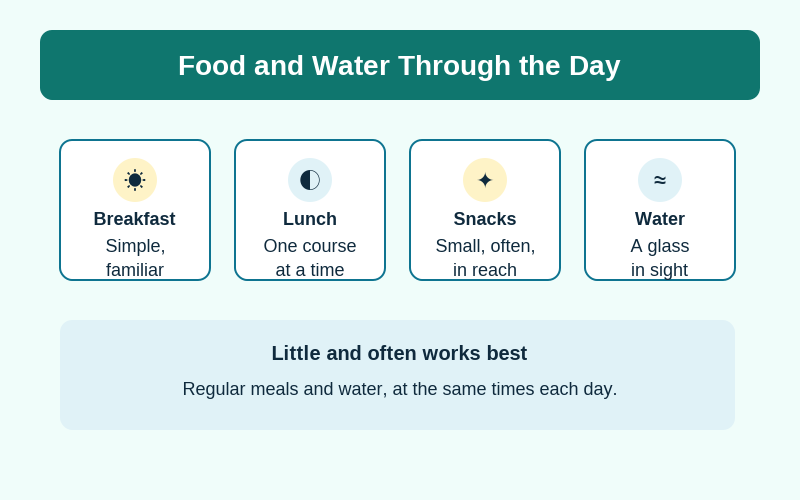
Regular meals are the foundation of good nutrition in Alzheimer home care. When meals happen at the same times, at the same table, every day, your parent does not have to remember when to eat. The day itself tells them. Breakfast, lunch, and dinner at set times, with a snack in between, give the day a rhythm, and they make it easier for you to notice if your parent is eating less than usual.
Keep the meal times in the daily care plan, and keep them steady, even at weekends. If your parent is out, or if a visitor comes, try to keep meals at their usual times. Serve meals in the same place, at the same table, with the same plates and cups, because familiarity helps. If your parent forgets whether they have eaten, do not argue. Offer a small snack, and check the plan to see what has already been served. A written record of meals — what was eaten, and when — can help the whole family keep track, and it is useful to show a doctor if you are worried about appetite or weight.
Making Meals Easier
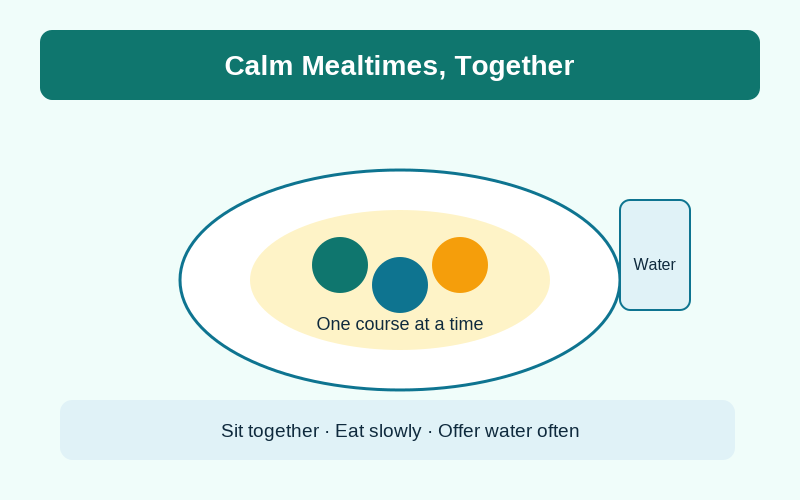
Meals are easier when they are simple. Serve one course at a time, on a plain plate, with a clear contrast between the food and the plate. A white plate on a dark table, or a coloured plate on a white table, makes it easier to see the food. Keep the table clear of clutter, and serve food that is easy to cut, easy to chew, and easy to eat. Cut food into small pieces before serving, and offer a spoon or a fork, whichever your parent finds easier.
Offer foods your parent likes, and keep the flavours familiar. A favourite meal from the past is more likely to be eaten than a new dish, even if the new dish is healthier. Do not worry about variety for its own sake. A simple, familiar meal, eaten with pleasure, is better than a varied meal that is left untouched. If your parent has difficulty with a knife and fork, try adapted cutlery with large handles, or a plate with a high rim that makes it easier to scoop food. If chewing is difficult, talk to a doctor about what textures are safe, and follow their advice. Never change the texture of food, or give thickened drinks, without a doctor's advice.
Finger Foods and Simple Snacks
Finger foods are foods that can be eaten by hand, without a knife and fork, and they are often the easiest way to make sure your parent eats enough. Small sandwiches, pieces of cheese, fruit, biscuits, or vegetables cut into sticks can all work, as long as they are easy to hold and easy to chew. Offer finger foods as snacks between meals, or as a main meal when using cutlery has become too hard. Keep a small plate of finger foods within reach during the day, so your parent can eat when they feel hungry, without having to ask.
Snacks should be small, frequent, and easy. A biscuit with a cup of tea in the morning, a piece of fruit in the afternoon, and a small snack before bed can add up to a surprising amount of food over a day. Keep snacks visible and within reach, in a bowl on the table or on a tray by the chair. Avoid snacks that are hard, dry, or difficult to chew, and avoid anything that could be a choking risk. If you are unsure about what is safe to eat, talk to a doctor. Our guide to mealtime help and nutrition has more ideas for simple, familiar food.
Water Through the Day
Water is easy to forget, and dehydration is a common problem in Alzheimer disease. Your parent may not feel thirsty, may forget to drink, or may avoid drinking because they do not want to need the toilet at night. Dehydration can cause confusion, tiredness, constipation, and falls, and it can make memory problems worse. It is important to offer water regularly through the day, and not to wait for your parent to ask for it.
Keep a glass of water within reach at all times: by the chair, by the bed, and on the table at meals. Offer a drink with every meal, and offer water again between meals, in the morning, in the afternoon, and in the evening. Use a cup or glass that is easy to hold, and not too heavy. If your parent prefers tea, juice, or soup, those count too, as long as they are fluids your parent enjoys. Avoid too much caffeine late in the day, because it can affect sleep. If your parent drinks very little, or if you notice signs of dehydration — dark urine, dry mouth, dizziness, or confusion that is worse than usual — talk to a doctor promptly. Do not try to force large amounts of water at once. Little and often, through the day, is the safest approach.
Weight Loss and Poor Appetite
Weight loss is common in Alzheimer disease, and it is often noticed late, because it happens gradually. Your parent may eat less without realising it, or may lose interest in food, or may find eating tiring. Clothes that become loose, a belt that needs tightening, or a face that looks thinner are all signs worth noticing. Weigh your parent regularly, if they are willing, and keep a simple record, so you can see a trend over weeks and months.
If your parent is losing weight, or eating very little, talk to a doctor. There may be a medical cause, such as pain, low mood, a mouth problem, or a medicine side effect, and a doctor can check for these. Do not try to solve weight loss on your own by adding supplements, changing the diet, or offering large meals. A doctor can advise on what is right for your parent, and whether a dietitian or another professional should be involved. In the meantime, keep meals regular, simple, and familiar, offer favourite foods, and eat together, because company at the table often helps appetite more than any change to the food itself.
Mealtimes as Calm Time
Mealtimes work best when they are calm. Turn off the television, put away the phone, and sit down together. Eat at the same table, at the same times, and allow plenty of time. Do not rush your parent, and do not watch every mouthful. A relaxed meal, eaten slowly, is more likely to be finished than a hurried one. If your parent becomes restless during a meal, stay calm, offer a reassurance, and try again in a few minutes. Do not turn the meal into a battle.
Keep the atmosphere pleasant. A clean table, a favourite plate, a flower, or some quiet music can make a meal feel like an occasion rather than a task. Talk about simple, pleasant things: the weather, the garden, a photograph, a memory from the past. Avoid difficult topics at the table, and avoid correcting your parent during a meal. If your parent wants to eat alone, respect that, but check that they are eating enough. A calm mealtime is not only about food. It is about connection, dignity, and the pleasure of eating together. Our guide to meaningful activities at home has ideas for making mealtimes part of the day's pleasures.
Shopping and Kitchen Safety
Shopping and cooking are part of good nutrition, and they need to be safe. If your parent still shops, go with them, or do the shopping together, and keep the list short and simple. Check the fridge regularly, and throw away food that is out of date, because your parent may not notice. Keep the kitchen safe: a stove with an automatic shut-off, sharp knives out of easy reach, and cleaning products stored where they cannot be mistaken for food or drink.
Plan meals for the week, and write the plan down, so shopping is simple and nothing is forgotten. Keep a few simple, familiar meals that can be prepared quickly, for days when time is short. If cooking has become unsafe, do the cooking yourself, or arrange for meals to be prepared, and keep the stove off when you are not there. Our guide to a safe home setup has more on kitchen safety, and our guide to safe bathing and personal care covers the bathroom as well.
When Eating Becomes Hard
There may come a time when eating becomes hard, even with simple food and a calm mealtime. Your parent may cough when they drink, pocket food in their cheek, or take a very long time to swallow. They may refuse food, or push it away, or become distressed at the table. These are signs to talk to a doctor promptly. Swallowing problems can be serious, and a doctor can assess what is happening and advise on what is safe to eat and drink.
Do not change the texture of food, or thicken drinks, without a doctor's advice. What looks helpful can be dangerous if it is not right for your parent. If your parent is refusing food, stay calm, offer a small amount, and try again later. Do not force food, and do not turn the meal into a struggle. Talk to a doctor about what you have noticed, and about what help is available, including a referral to a speech and language therapist or a dietitian if needed. Eating is about more than nutrition. It is about pleasure, dignity, and connection, and it is worth getting the right help. If you would like to talk about care, read more about who we are or contact us.
Frequently Asked Questions
My parent forgets to eat. What should I do? Keep meals at the same times, at the same table, every day. Offer food, do not wait to be asked. Keep a written record of meals, and keep snacks and water within reach through the day.
What if my parent refuses food? Stay calm, offer a small amount, and try again later. Offer favourite foods, eat together, and keep mealtimes relaxed. If refusal continues for more than a few days, or if your parent is losing weight, talk to a doctor.
How much water should my parent drink? There is no single amount that fits everyone. Offer water regularly through the day, keep a glass within reach, and offer a drink with every meal. If you are worried about dehydration, talk to a doctor.
Is it safe to change the texture of food or thicken drinks? No, not without a doctor's advice. What looks helpful can be dangerous if it is not right for your parent. Talk to a doctor if you notice coughing, choking, or difficulty swallowing.
What should I do if my parent is losing weight? Talk to a doctor. There may be a medical cause, and a doctor can check for it and advise on what to do. Keep meals regular, simple, and familiar in the meantime, and keep a record of weight and appetite.
Sources and Further Reading
This guide draws on the following sources, all accessed 29 November 2026.
- Alzheimer's Association — Facts and Figures, and information on Alzheimer disease and nutrition. alz.org/alzheimers-dementia/facts-figures
- National Institute on Aging (NIA) — information on Alzheimer's disease, dementia, and caregiving. nia.nih.gov/health/alzheimers-and-dementia
If this guide helped you, please share it with another family who needs it, and read our other guides on Alzheimer support at home. If you would like to talk about care for your parent, start on our homepage or contact us — a friendly advisor is ready to listen, with no obligation. You can write to us at hello@homecare.biz.id.
Tags: alzheimer home care, senior nutrition, dementia home care
Last reviewed: 25 June 2026. This guide is general information and is reviewed regularly. It is not a substitute for medical advice. Always talk to a doctor about diagnosis, treatment, or any change to care or medication.