
Home Care and Caregiver Support: Managing Stress and Sleep as a Caregiver
Written by the HomeCare editorial team. Sources: Alzheimer's Association, National Institute on Aging (NIA).
If you are caring for a parent at home, you probably know the feeling well: your mind is still running through the day long after your body has stopped. Did your parent eat enough? Will they wake in the night? What needs doing tomorrow? Stress and broken sleep often arrive together in caregiving, and each one makes the other worse. When you are tired, small problems feel bigger. When you are stressed, sleep comes harder, and the next day starts with less patience and less energy than the day before.
This guide is written for adult children caring for a parent at home. It does not promise perfect sleep or a stress-free life, because caregiving is demanding and no guide can change that. What it offers instead is a set of steady, practical habits: small things you can do each day to lower stress a little and to protect your sleep a little, even when the nights are broken and the days are full. You do not need to do all of them. Start with one or two, keep them going for a week, and then add another. If you would like the wider picture first, read our complete guide to home care and our guide to avoiding caregiver burnout.
Why Stress Builds Up in Caregiving
Caregiving stress rarely comes from one big event. It builds slowly, from many small demands that never quite stop. You are always on call, even when you are resting, because you are listening for a sound from the next room. You make dozens of small decisions every day: what to cook, when to help with washing, whether today is a good day for a walk, what to do when your parent is upset. You carry worry about the future too: how will things change, how long can you keep going, and what will happen if you become ill yourself? That steady background of worry is tiring in a way that a single busy day is not, because there is no clear end to it.
Stress also grows when caregiving takes over the parts of life that used to restore you. Time with friends shrinks. Hobbies are put aside. Sleep is interrupted. Work becomes harder to concentrate on, and family life can feel strained. Many caregivers feel guilty about wanting a break, and that guilt adds its own weight. It helps to name this plainly: feeling stressed does not mean you are failing, and it does not mean you love your parent any less. It means you are carrying a heavy load for a long time, and your body and mind are telling you so. Our guide to self-care tips for family caregivers looks at this in more detail, and our guide on how to ask for help without guilt can help when the load needs sharing.

How Stress Shows Up
Stress does not always feel like worry. Sometimes it shows up in the body first: tight shoulders, a headache at the end of the day, a churning stomach, or a cold that seems to linger. Sometimes it shows up in mood: you snap at a family member over something small, or you feel tearful on the drive home for no clear reason. Sometimes it shows up in sleep: you lie awake going over the day, or you wake at three in the morning and cannot get back to sleep, even though you are exhausted. And sometimes it shows up as numbness: you stop noticing how tired you are, and you keep going on habit alone.
It helps to notice your own early signs, because they arrive before a crisis does. Keep a short note for a week, just a line or two each evening: how did you sleep, how did you feel, what was the hardest moment of the day? Patterns usually appear quickly. Perhaps your worst nights follow evenings when you skipped dinner, or your hardest mornings follow a night when your parent woke several times. Perhaps Sundays are hard because the week ahead feels long. Knowing the pattern does not fix it by itself, but it tells you where a small change might help most. If you notice that you are crying often, losing your temper often, or feeling hopeless, do not treat that as something to push through. Talk to your own doctor, and tell another family member how you are feeling.
Steady Daily Habits That Lower Stress
The habits that lower stress are rarely dramatic. They are small, repeated things that give the day a shape and give your body regular chances to settle. The first is a short pause in the morning, before the day starts properly. Five minutes is enough: a cup of tea by the window, a few slow breaths, a short walk around the garden before anyone else is awake. The point is not to solve anything. It is to start the day with a moment that belongs to you, before the demands begin. Many caregivers find that a quiet morning makes the whole day feel more manageable, even when nothing else changes.
The second habit is a regular break in the middle of the day. Step outside for ten minutes, even if it is only to stand in the garden or walk to the end of the street. Daylight, fresh air, and a change of room all help the body to reset. The third habit is a simple end to the working part of the day: a time, even a rough one, when the main tasks are done and you change out of the clothes you have been caring in, wash your hands and face, and sit down properly for the evening. These small markers tell your body that the day has phases, and that the caring part of it ends, even when you are still in the same house. Write these three pauses into your week, and protect them the way you would protect a care visit. A weekly care schedule can help here; see our guide to building a weekly care schedule.
A Calmer Evening Routine
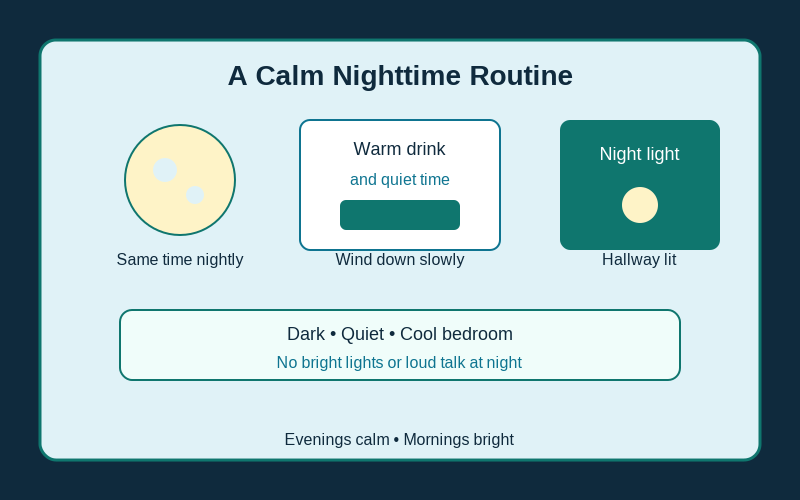
Evenings matter more than most caregivers expect, because the way the evening goes decides how the night goes. If the house stays bright, noisy, and busy until late, your body stays alert, and sleep is harder when you finally lie down. Start winding down an hour or two before bed. Turn down the lights, turn off the television if it is only background noise, and keep the last part of the evening quiet. A warm drink, a short chat, and a familiar, low-key activity — a photograph album, a few pages of a book, gentle music — can help both you and your parent to settle.
Try to keep the last hour before bed free of difficult conversations, paperwork, and planning. If there is something worrying you, write it on a piece of paper and leave it for the morning, instead of turning it over in your head in bed. Keep your phone out of the bedroom if you can, or at least switch it to silent and face down, so that a message does not pull you back into the day. If your parent tends to become restless in the evening, a steady evening routine helps them too, and our guide to managing sundowning at home has ideas that work well alongside this one. The aim is the same for both of you: a house that grows quieter as bedtime approaches, so that sleep does not have to fight the day.
Sleep When Nights Are Broken
Broken nights are one of the hardest parts of caregiving. Your parent may wake confused, need the toilet, feel frightened, or simply be awake and want company. When that happens night after night, your sleep is broken too, and the tiredness builds. The first step is to make night waking as calm and brief as possible. Keep the response the same each time: a low voice, a night light in the hallway and bathroom, a toilet visit or a drink of water, a short reassurance, and then back to bed. Avoid turning on bright lights, starting a conversation, or offering food, because all of these tell the body that the night is over and the day has begun.
During the day, a few things help nights to be steadier. Daylight in the morning, a short walk or time outside, and a regular bedtime all help the body clock. Long naps late in the afternoon can make nights harder, so a short rest earlier in the day is usually better. Keep the bedroom dark, quiet, and cool, and keep the same bedtime each night, even at weekends. If you wake in the night and cannot get back to sleep, do not lie there worrying. Get up, sit in another room with a dim light, read something dull or listen to quiet music, and return to bed when you feel sleepy. If broken nights go on for weeks and you feel exhausted, unsafe, or unable to cope in the day, talk to a doctor about both your parent's sleep and your own. Our guide to sleep support and nighttime routine covers the practical side of safer, calmer nights in more detail.
Food, Movement, and Daylight
When you are busy caring, your own meals are often the first thing to slip. You skip breakfast, eat standing up, or live on tea and biscuits until the evening. That makes stress and tiredness worse, because your body is running with too little fuel. You do not need a special diet. You need regular, simple food: breakfast, lunch, and dinner at roughly the same times each day, with water within reach. Cook a little extra at dinner and keep the rest for lunch the next day. Keep fruit, bread, and simple snacks in the house so that a missed meal is still a small meal, not no meal at all. Eating with your parent, sitting down together at the same table, helps both of you, because it turns a task into a shared, calm part of the day.
Movement works in a similar way: a little, often, is better than a lot once in a while. A short walk each day, ideally in daylight, is one of the most reliable ways to lower stress and improve sleep. Walk with your parent when you can, and walk alone when you need time to yourself. Gentle stretching in the morning, a few minutes in the garden, or dancing to a favourite song in the kitchen all count. Daylight matters too, especially in the morning, because it helps set the body clock for the night ahead. If you spend the whole day indoors, your body loses its sense of day and night, and sleep becomes harder. Even ten minutes outside in the morning can make a difference to how the night goes.
Sharing Nights and Taking Breaks
No one person can be on call every night and every day without a break. If your parent wakes most nights, you need help with nights, not just with days. Talk to your family about sharing the night, even if it is only one or two nights a week. One night of unbroken sleep can change how the whole week feels. If family cannot cover nights, ask your care provider about overnight help, even for a few nights a week, or look into respite options in your area. Our guide to respite care options for family caregivers explains the choices, and our guide to local help and community resources can help you find what exists near you.
Breaks in the day matter just as much. A break does not have to be a holiday. It can be two hours on a Saturday when a sibling takes over, an afternoon when a professional caregiver visits, or a regular morning when you go to a support group while someone else stays with your parent. Plan breaks in advance, write them into the week, and treat them as part of the care plan, not as a reward you have to earn. If the cost of extra help is a worry, it helps to know the figures: the CareScout median cost of home care in the United States was $35 per hour in 2025, according to CareScout's cost of care survey, so even a few hours a week has a clear, plannable cost. Talk openly with your family about sharing that cost, and keep a note of what help you have arranged, so that no one person carries it all alone.
When to Talk to a Doctor
Most caregiver stress improves with rest, routine, and shared help, but some signs mean it is time to talk to a doctor promptly. For yourself, these include exhaustion that sleep does not fix, feeling hopeless or tearful most days, losing your temper often, skipping your own medical appointments, or finding that you cannot eat or sleep at all. For your parent, sudden changes matter most: much more confusion than usual, not being able to be woken, a fever, a fall, new pain, or a sudden change in sleep or appetite. A doctor can check what is happening and talk about the next steps, and you do not need to wait until things are at breaking point to ask.
It also helps to keep a short daily note to take to the appointment: sleep, appetite, mood, and anything unusual, for both your parent and yourself. A few lines a day are enough, and they make it much easier for a doctor to see what has changed and when. If you find it hard to say how you are feeling, write it down before the appointment and hand the note to the doctor. Many caregivers find that easier than saying it out loud. You can also write to us at hello@homecare.biz.id if you would like to talk about care for your parent, or read more about who we are and how we work. Asking for help from a doctor, from family, or from a care service is part of good care, not a failure of it.
A Simple Weekly Plan You Can Start
A plan only works if it is small enough to keep. The plan below is a starting point. Choose the parts that fit your week, and leave the rest. The goal is not to do everything, but to do a few things regularly, so that stress has less room to build and sleep has a better chance.
- Every morning: Five quiet minutes before the day starts, daylight through a window or a short step outside, and breakfast sitting down.
- Every day: A short walk or time outside, a midday pause of ten minutes away from caring tasks, and a calm last hour before bed with the lights turned down.
- Every evening: The same bedtime routine, in the same order, for you and your parent, with phones silent and the house growing quiet.
- Twice a week: A shared meal or a phone call with a friend or family member, and a short note about sleep and mood.
- Once a week: A planned break of at least two hours, covered by family, a friend, or a professional caregiver, and one task handed to someone else.
- Once a month: A review of the plan with your family: what helped, what did not, and what needs to change next month.
Try this shape for two weeks, and keep the short evening note. At the end of the two weeks, look back: which nights were better, and what was different about those days? Keep what helped, drop what did not, and change one thing at a time. If you would like to read more, our other guides cover the daily routine, mealtimes, and talking with family about care, and our guide to balancing work and family caregiving is useful if you are also holding down a job while you care.
Frequently Asked Questions
Why does caregiving affect my sleep so much? Caregiving keeps you alert around the clock, and that alertness does not switch off at bedtime. Worry about the day, listening for your parent at night, and a day without enough daylight or rest all make sleep lighter and more broken. A steady routine, daylight in the morning, and shared nights are the most practical ways to help sleep settle again.
What can I do when I wake at three in the morning and cannot get back to sleep? Do not lie in bed worrying. Get up, go to another room with a dim light, read something calm or listen to quiet music, and return to bed when you feel sleepy. Keep the lights low and avoid your phone, because bright light and messages tell your body the day has started.
Is it normal to feel guilty about wanting a break? Yes, very normal, and very common among family caregivers. Wanting rest does not mean you love your parent less. It means you are tired, and rest is what lets you keep caring well. A planned break is part of the care plan, not a failure of it.
How much sleep do I need as a caregiver? There is no single number that fits everyone, and this guide does not give medical advice. What matters is whether you wake feeling rested enough to get through the day safely and kindly. If broken sleep leaves you exhausted, unsafe, or unable to cope, talk to your own doctor and ask your family or care provider about sharing nights.
When should I ask for professional help with nights? Ask before you reach breaking point. If your parent wakes most nights, if nights feel unsafe, or if you are exhausted during the day, talk to your care provider about overnight help, even for a few nights a week, and look into respite options. Our guide to respite care options explains the choices.
Sources and Further Reading
This guide draws on the following sources, all accessed 29 November 2026.
- Alzheimer's Association — Facts and Figures, and information on dementia care at home. alz.org/alzheimers-dementia/facts-figures
- National Institute on Aging (NIA) — information on Alzheimer's disease, dementia, and caregiving. nia.nih.gov/health/alzheimers-and-dementia
If this guide helped you, please share it with another family who needs it, and read our other guides on home care and caregiver support. If you would like to talk about care for your parent, start on our homepage or contact us — a friendly advisor is ready to listen, with no obligation. You can write to us at hello@homecare.biz.id.
Tags: home care caregiver, caregiver stress, senior home care
Last reviewed: 28 June 2026. This guide is general information and is reviewed regularly. It is not a substitute for medical advice. Always talk to a doctor about diagnosis, treatment, or any change to care or medication.