
Home Care for Dementia: Sleep Support and Nighttime Routine
Written by the HomeCare editorial team. Sources: Alzheimer's Association, National Institute on Aging (NIA).
Sleep is often one of the first things to change when a parent is living with dementia, and one of the hardest for the family. Your parent may wake often at night, wander the house, become restless in the evening, or sleep during the day and stay awake at night. You may lie awake listening, worried about a fall, a door opening, or a parent who is frightened in the dark. You may be exhausted yourself, and then feel guilty for feeling tired. If any of this sounds familiar, you are not alone, and there are practical steps that can help — even if no single step solves the problem overnight.
This guide is for adult children caring for a parent at home. It explains, in plain language, why sleep changes, what daytime habits help, how to build a calm evening routine, and how to make nights safer. It also covers what to do when your parent wakes at night, and when to talk to a doctor. For the wider picture, read our complete family guide to dementia care at home, our daily routine guide, and our guide to a calm and familiar home. If you would like to talk through your parent's situation, you can contact our team.
Why Sleep Often Changes with Dementia
Dementia can change the body's sense of day and night. The brain's internal clock, which tells us when to feel sleepy and when to feel awake, may work less reliably. Your parent may feel sleepy in the afternoon and wide awake at midnight, or may wake many times during the night. Tiredness, pain, needing the toilet, hunger, thirst, or a room that is too warm or too cold can all make sleep worse. A day with little daylight, little movement, and long naps can also make nights harder, because the body has not had the signals it needs to know that night is for sleeping.
It helps to know that broken sleep is common in dementia, and that it is not your fault, or your parent's fault. It also helps to keep a simple sleep note for a week or two: what time your parent went to bed, when they woke, what seemed to help, and what the day had been like. A note like this can show patterns you might otherwise miss — for example, that nights are worse after a busy afternoon, or better after a morning walk — and it is useful to share with a doctor if sleep becomes a serious problem. Do not expect a perfect night every night. The aim is a steadier pattern, with more rest for your parent and for you.
Daytime Habits That Help Nighttime Sleep
Good sleep starts in the morning, not at bedtime. The most helpful daytime habit is daylight: open the curtains first thing, sit near a window during the day, and get outside for a short walk if you can. Daylight helps the body's clock stay on track, and it is one of the simplest things a family can do. A short walk in the morning, or a gentle activity outdoors, also uses energy and lifts mood, which can help with sleep later. Our guide to activities that support daily engagement has ideas for daytime activities that fit a parent's energy and interests.
Keep daytime naps short, and avoid long naps late in the afternoon. A short rest of twenty to thirty minutes after lunch is fine for many people, but a two-hour sleep in the late afternoon can make it much harder to fall asleep at night. If your parent naps, try to keep the nap in a chair rather than in bed, and in a bright room rather than a dark one, so the body does not mistake the nap for nighttime. Keep meals, walks, and activities at roughly the same times each day, because a steady routine gives the body a rhythm it can follow, even when memory is fading.
Movement matters too, within what is safe and comfortable. A walk, gentle stretching, gardening, or a simple household task all count as activity, and they all help the body feel ready for sleep at night. Avoid vigorous activity late in the evening, which can be stimulating rather than calming. If your parent has pain, stiffness, or difficulty walking, talk to a doctor about safe ways to stay active, rather than trying to push through pain. The goal is a day with daylight, movement, company, and a regular rhythm — not a day filled with exhausting effort.
A Calm Evening Routine
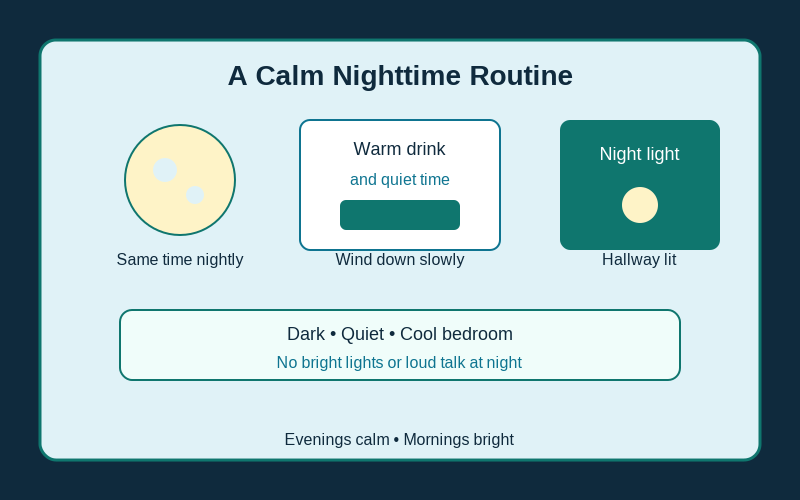
Evenings are often the hardest part of the day, so a calm evening routine is worth building carefully. Begin winding down an hour or two before bedtime, and keep the same steps in the same order every night, so your parent's body learns what comes next. Turn lights on before it gets dark, so the house never slides into shadow. Close the curtains, lower the volume of the television or turn it off, and put on familiar music at a low volume. Offer a warm drink and a light snack, and keep conversation gentle and unhurried.
A simple routine might look like this: dinner at the same time, a short sit together, a warm drink, a wash and change into night clothes, a few minutes of quiet music or reading, and then bed at the same time each night. Avoid visitors, outings, and difficult conversations late in the day, because they can add tiredness and confusion to an already difficult time. Avoid bright screens and loud news programmes in the evening, which can be upsetting or overstimulating. If your parent becomes restless in the evening, try a familiar photograph, a short walk around the house, or a task with the hands, rather than arguing or trying to reason them out of a fear that feels real to them.
The Bedroom: Dark, Quiet, and Cool
The bedroom should be a place of rest, not a place of confusion. Keep it dark, quiet, and cool at night, with curtains that block outside light and a door that can be closed against household noise. Keep a lamp within reach of the bed, so your parent can see if they wake, and keep glasses, a glass of water, and a clock within reach too. A clock that shows the time clearly can help a person who wakes at night know whether it is time to get up or time to go back to sleep. Keep the bed in the same place, with familiar bedding, and avoid a television in the bedroom if it disturbs sleep.
Comfort matters. A mattress and pillows that are comfortable, bedding that is warm but not heavy, and night clothes that are easy to put on and comfortable to sleep in all help. Keep the room at a comfortable temperature — not too warm, not too cold — and check that your parent is warm enough without being overheated. If your parent gets up often to use the toilet, keep a clear path to the bathroom, with a night light to guide the way. If noise from outside disturbs sleep, soft earplugs or a quiet fan may help, but check with your parent first, and do not use anything that would stop them hearing a smoke alarm or a call for help.
When Your Parent Wakes at Night
Night waking is common, and the best response is usually calm and brief. If your parent wakes, go to them quietly, speak in a low, calm voice, and check the simple things first: do they need the toilet, are they thirsty, are they too warm or too cold, are they in pain, are they frightened? Offer a toilet visit, a drink of water, and a reassuring word, and help them back to bed without turning on bright lights or starting a conversation that wakes everyone fully. A familiar blanket, a photograph, or a few words — "it is night time, it is safe, I am here" — can be enough to settle a person back to sleep.
Do not argue about the time, and do not try to reason your parent out of a belief that feels real to them, such as needing to go to work or to collect a child. Acknowledge the feeling, offer reassurance, and gently redirect: "I can see you are worried. Let us sit for a moment, and then we will go back to bed." If your parent wants to get up and walk around, a short, supervised walk to the kitchen and back, with a warm drink, is often safer than trying to keep them in bed. If nights become unsafe — your parent tries to leave the house, falls, or cannot be settled — talk to a doctor promptly, and consider overnight help, even for a few nights a week, so the family can sleep.
Sundowning and Difficult Evenings
Many families notice that confusion, restlessness, and distress grow worse in the late afternoon and evening. This pattern is often called sundowning, and it is one of the most exhausting parts of dementia care. Your parent may pace, repeat questions, try to leave the house, become suspicious, or say they want to "go home" even when they are already home. It is frightening to watch, and it is frightening for the person experiencing it. The first thing to know is that sundowning is common, it is not your fault, and it is not your parent being difficult on purpose.
Tiredness, low light, hunger, pain, needing the toilet, and a day full of small confusions all add up by evening. That is why the most useful response is often the simplest: make the evening calmer before it starts. Keep the afternoon quiet, avoid visitors and outings late in the day, and begin winding down early. Turn lights on before it gets dark, close the curtains, put on familiar music, and offer a warm drink and a light snack. Keep the same evening routine every day. For more detail, read our guide to managing sundowning at home, and our guide to communicating with calm and patience.
Food, Drink, and the Evening
What your parent eats and drinks in the evening can affect sleep. A light evening meal, eaten at the same time each night, is usually better than a large, late meal. A warm drink before bed — milk, herbal tea, or simply warm water — can be part of a calming routine, and a small snack can help if hunger wakes your parent at night. Offer water regularly during the day, and keep a glass of water by the bed at night, because thirst can wake a person, and dehydration can make confusion worse.
Avoid caffeine late in the day, because it can make it harder to fall asleep and stay asleep. That means tea, coffee, and some soft drinks, as well as chocolate, should be kept to the morning and early afternoon if possible. Avoid alcohol in the evening, and talk to a doctor about any drinks or foods that might affect sleep. Do not change your parent's diet suddenly, and do not use food or drink as a substitute for medical advice. If appetite, weight, or swallowing changes, talk to a doctor or a dietitian. For more on meals, see our guide to mealtime help and nutrition tips.

Safer Nights at Home
Safer nights start with a safe home. Fit a door alarm or a chime that sounds when an outside door opens, so the family knows if your parent leaves the house at night. Use motion-sensor lights in the hallway and bathroom, so your parent can find the toilet without waking the whole house. Keep a night light on, keep the path from the bed to the bathroom clear of clutter, shoes, and cables, and keep the stairs free of obstacles. A personal alarm by the bed can help your parent call for help if they need it, and a recent photograph and a short description, kept where you can find them quickly, are useful if your parent ever leaves the house.
Check the home at night as your parent would experience it. Walk from the bed to the bathroom in the dark, and notice what is hard to see or easy to trip over. Check that the bathroom is warm and well lit, that the toilet is easy to find, and that medicines and cleaning products are locked away. If your parent uses a walking aid, keep it by the bed, within easy reach. Tell neighbours what to do if they see your parent out alone at night, and agree a plan with the family: who checks, who calls whom, and when to call the police or the local emergency number. It is always better to call early if your parent cannot be found.
Looking After the Caregiver's Sleep Too
Broken nights do not only affect the person with dementia. They affect the family caregiver too, and exhaustion can build up quickly. If you are waking several times a night, every night, you will feel tired, irritable, and less able to cope during the day, and that is normal. It does not mean you are failing. It means you need help, and you need rest. Talk honestly with other family members about sharing night-time care, even if that means taking turns, or asking a sibling to stay over on some nights so you can sleep.
Overnight help, even for a few nights a week, can make a real difference. A professional caregiver who stays overnight can respond to night waking, help with the toilet, and keep your parent safe, while you sleep in another room. Respite care — planned, trusted cover so a family caregiver can rest — is not a luxury, it is part of the care plan. Our guide to when to ask for extra help at home explains how to arrange it, and what to say when you ask. Look after your own sleep, your own meals, and your own health, because a caregiver who is exhausted cannot care well for long.
When to Talk to a Doctor
Talk to a doctor if sleep problems are new, sudden, or getting worse, or if your parent is very sleepy during the day, snores loudly, stops breathing during sleep, or seems unusually confused after a bad night. Sudden confusion can have a medical cause, such as an infection or a reaction to a medicine, and it needs prompt medical attention. Bring your sleep note to the appointment, so the doctor can see the pattern, and bring a list of medicines, including anything bought without a prescription.
Do not change any medicine, or start a new medicine, supplement, or sleep aid, without medical advice. Some products that are sold for sleep can make confusion worse, or can interact with other medicines, and only a doctor or pharmacist can advise on what is safe for your parent. If the doctor suggests a change, ask what to expect, how long to try it, and what to watch for. If nights become unsafe despite your best efforts, talk to the doctor and to your care provider about more support — more hours, overnight cover, or a different care arrangement. Safety is not about locking a person in. It is about making the night the calmest and safest part of the day.
Frequently Asked Questions
Should my parent nap during the day? A short nap of twenty to thirty minutes after lunch is fine for many people. Avoid long naps late in the afternoon, because they can make it harder to fall asleep at night. Keep naps in a chair, in a bright room, rather than in bed in the dark.
What should I do when my parent wakes at night? Stay calm, keep the lights low, and check the simple things first: toilet, thirst, warmth, pain, or fear. Offer a brief reassurance, help them back to bed, and avoid starting a conversation that wakes everyone fully.
Is it normal for sleep to get worse in the evening? Yes, many families notice that confusion and restlessness grow worse in the late afternoon and evening. This is often called sundowning. A calm evening routine, good lighting, and a quiet afternoon can help.
Should I use a night light? Yes, for most families a small night light in the hallway, in the bathroom, and by the bed makes the journey to the toilet safer and less frightening. Motion-sensor lights are useful, because they turn on automatically and turn off again afterwards.
When should I ask for overnight help? Before you reach breaking point. If nights are unsafe, or if you are exhausted and cannot sleep, talk to your family and your care provider about overnight cover, even for a few nights a week. Asking for help is part of good care, not a failure of it.
Sources and Further Reading
This guide draws on the following sources, all accessed 29 November 2026.
- Alzheimer's Association — Facts and Figures, and information on dementia care at home. alz.org/alzheimers-dementia/facts-figures
- National Institute on Aging (NIA) — information on Alzheimer's disease, dementia, and caregiving. nia.nih.gov/health/alzheimers-and-dementia
If this guide helped you, please share it with another family who needs it, and read our other guides on daily routines, activities, and home safety. If you would like to talk about care for your parent, start on our homepage or contact us — a friendly advisor is ready to listen, with no obligation.
Last reviewed: 24 June 2026. This guide is general information and is reviewed regularly. It is not a substitute for medical advice. Always talk to a doctor about diagnosis, treatment, or any change to care or medication.
Tags: dementia home care, senior sleep, family caregiver