
Home Care for Dementia: Managing Sundowning at Home
Written by the HomeCare editorial team. Sources: Alzheimer's Association, National Institute on Aging (NIA).
Many families notice that confusion, restlessness, and distress grow worse in the late afternoon and evening. Your parent may pace, repeat questions, try to leave the house, become suspicious, or say they want to go home, even when they are already home. This pattern is often called sundowning, and it is one of the most exhausting parts of dementia care. It is frightening to watch, and frightening for the person experiencing it. This guide explains what sundowning can look like at home, why evenings are harder, and how families can plan calmer evenings.
The first thing to know is that sundowning is common, it is not your fault, and it is not your parent being difficult on purpose. The second is that a steady routine, a calm home, and a gentle response can help a great deal, even if they cannot remove sundowning entirely. This guide is practical, and it is written for adult children caring for a parent at home. If evenings are difficult, read this guide alongside our daily routine guide for families and our complete family guide to dementia care at home.
What Sundowning Is
Sundowning is a word families and care professionals use for a pattern: confusion, restlessness, and distress that grow worse in the late afternoon and evening, and often ease again by morning. It does not happen to everyone with dementia, and it does not happen every evening, but when it does, it can be hard to manage. Your parent may become more confused, more anxious, or more agitated. They may pace around the house, repeat the same question, or try to leave. They may become suspicious, or say things that are not true. They may also have difficulty sleeping afterwards.
Sundowning is not a diagnosis, and it is not a separate illness. It is a pattern of behaviour that can have many causes, and it can change over time. Some evenings are calm, others are difficult, and the same evening routine may work one day and not the next. That unpredictability is part of what makes sundowning so tiring. Keeping a short note — what happened, when, and what seemed to help — can show a pattern over a week, and that note is useful for a doctor too, if you need to talk about evenings.
Why Evenings Are Harder
Nobody knows exactly why evenings are harder, but tiredness, low light, hunger, pain, needing the toilet, and a day full of small confusions all add up. By late afternoon, your parent is tired, and tiredness makes confusion worse. As daylight fades, shadows grow, and a familiar room can look strange. A dark hallway, a mirror, or a window reflecting the room can be frightening if your parent does not recognise what they are seeing.
Other factors can add to the difficulty. A busy day, a late visitor, a change in routine, or a missed meal can all make the evening harder. So can hunger, thirst, pain, or needing the toilet, especially if your parent cannot explain what is wrong. That is why the most useful response is often the simplest: make the evening calmer before it starts, and check the simple things first. A warm drink, a light snack, a toilet visit, and a quiet room can sometimes prevent a difficult evening, or make it shorter.
Recognising the Pattern
Start by noticing when sundowning happens, and what happens before it. Keep a simple note for a week or two: the time, what your parent did or said, what had happened earlier in the day, and what seemed to help. Did the difficult evening follow a busy day, a late outing, a missed nap, or a change in routine? Did it start at the same time each day? Did a particular room, sound, or light seem to trigger it? A pattern often becomes clear after a few days, and that pattern can help you plan.
Notice the early signs too. Restlessness, sighing, looking towards the door, repeating a question, or becoming quieter than usual can all be early signs that a difficult evening is coming. If you notice those signs, you can act early: offer a drink, close the curtains, turn on the lights, put on familiar music, and start the evening routine a little earlier. Acting early is far easier than trying to calm a parent who is already very distressed. Share the note with other family members and with any professional caregiver, so everyone knows what to watch for.
A Calmer Afternoon
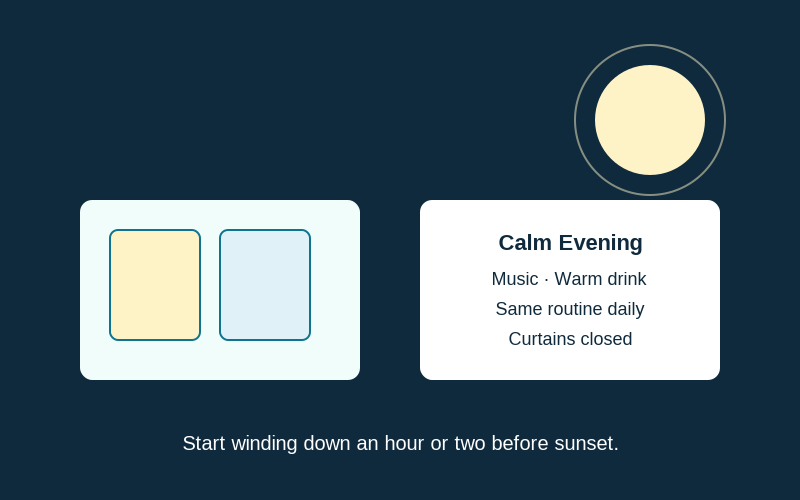
A calm evening starts in the afternoon. Keep the afternoon quiet, avoid visitors and outings late in the day, and begin winding down an hour or two before sunset. If your parent has had a busy morning, allow a rest in the afternoon, in a comfortable chair, with a book or music. Avoid long naps late in the afternoon, because they can make the night harder, but a short, quiet rest is often helpful.
Keep the afternoon routine steady, and avoid starting anything new or demanding. A favourite activity in the early afternoon — music, photographs, a gentle walk, or a simple task — followed by a quiet time, is a good rhythm. Offer a light snack and a drink in the afternoon, so your parent is not hungry or thirsty in the evening. If your parent becomes restless in the afternoon, a short walk, a familiar photograph, or a task with the hands can help. Our guide to activities that support daily engagement has ideas for calm afternoon activities.
A Steady Evening Routine
Keep the same evening routine every day, so your parent's body learns what comes next. Turn the lights on before it gets dark, so the house never slides into shadow. Close the curtains, put on familiar music, and offer a warm drink and a light snack. Dinner should be at the same time, at the same table, and kept simple. After dinner, a quiet activity — a photograph album, a familiar song, or simply sitting together — can help the evening feel settled.
Prepare for the evening in the morning, not in the evening itself. Lay out night clothes, check that the hallway and bathroom lights work, and make sure the house is warm enough. A small snack and a drink by the bed can help if your parent wakes in the night. Keep the evening free of difficult conversations, visitors, and outings. If a visitor must come, keep the visit short and calm, and in the early evening, not late at night. Our guide to sleep support and nighttime routine covers the steps from evening to bedtime in detail.
When Sundowning Happens
When sundowning happens, stay calm, even if you are tired yourself. Do not argue, do not raise your voice, and do not try to reason your parent out of a fear that feels real to them. Move to a quieter place if you can, lower your voice, and acknowledge the feeling: "I can see you are worried. I am here with you. You are safe." That simple reassurance, repeated calmly, can be more helpful than any explanation.
Check the simple things first. Is your parent hungry, thirsty, tired, in pain, or needing the toilet? Is the room too dark, too noisy, or too crowded? Offer a drink, a light snack, and a toilet visit, and then gently redirect: "Let us sit in the kitchen and have some tea." A short walk around the house, a familiar photograph, a favourite song, or a task with the hands can break the loop. If your parent paces, walk with them, rather than trying to stop them. Walking together is safer, and it can be calming. Our guide to communicating with calm and patience has more ideas for responding to distress.

When Your Parent Wants to Go Home
One of the most painful parts of sundowning is when your parent says they want to go home, even when they are already home. It is natural to want to correct them: "You are home. This is your house." Try not to. Your parent may be thinking of a childhood home, or a home from long ago, or they may simply be feeling lost and frightened, and "home" is the word for safety. A blunt correction can force grief, or fear, to be relived, without helping.
Instead, acknowledge the feeling, and listen. "Tell me about home. What was it like?" Listen to the answer, even if you have heard the story before. Offer a cup of tea and a photograph, and let the feeling pass. If your parent tries to leave the house, stay calm, walk with them if it is safe, and gently guide them back. "Let us have some tea first, and then we will go" can sometimes break the urgency. Make sure the house is safe, with a door alarm or a chime that sounds when an outside door opens, and tell neighbours what to do if they see your parent out alone. Our complete family guide has a full home-safety plan for wandering.
Night Safety After Sundowning
After a difficult evening, the night can be difficult too. Keep bedtime at the same time each night, and follow the same steps: a warm drink, a wash, night clothes, a short, calm conversation, and lights out. Use a night light in the hallway and bathroom, so your parent can find the toilet without waking the whole house. Keep a clear path from the bed to the bathroom, with nothing to trip over.
Consider a door alarm or a chime that sounds when an outside door opens, so you know if your parent leaves the house at night. Make sure everyone in the house can still get out safely in a fire. If your parent wakes at night, keep the response calm and brief: a toilet visit, a drink of water, a reassuring word, and then back to bed. Avoid turning on bright lights or starting a conversation that wakes everyone fully. If nights become unsafe or exhausting, talk to a doctor and consider overnight help, even for a few nights a week.
Looking After Yourself
Sundowning is exhausting, because it happens at the end of a long day, when you are already tired. It is normal to feel frustrated, guilty, or sad, and it is normal to wish the evening would end. Those feelings do not make you a bad daughter or son. They make you a human being doing a very hard job. Be kind to yourself, and ask for help before you reach breaking point.
Share evening care if you can, even for one evening a week, so you can rest. Ask another family member, a friend, or a professional caregiver to cover the evening, or part of it. Plan your own rest in advance, and write it into the week's plan. A support group, in person or online, can help enormously, because other caregivers understand sundowning in a way that well-meaning friends often cannot. You can learn more about asking for help in our guide to when to ask for extra help at home, and about planning care in our complete guide to home care.
Keep a small evening routine for yourself as well, after your parent has settled for the night. A warm drink, a few minutes of quiet, a short walk, or a phone call with a friend can help you let go of the day. Do not spend the whole evening replaying what went wrong, or worrying about tomorrow. Write down one thing that helped, if anything did, and then rest. You have done a hard day of caring, and rest is part of caring well, not a reward you must earn first.
When to Talk to a Doctor
Talk to a doctor promptly if sundowning becomes frequent, severe, or unsafe, despite a steady routine and a calm home. Talk to a doctor too if there is a sudden change — your parent is much more confused than usual, cannot be woken, has a fever, has fallen, or is in pain — because a sudden change can have a medical cause. Keep your note of what happened, when, and what seemed to help, so the doctor can see the pattern.
Do not change any medicine without medical advice, and do not start a new medicine, supplement, or sleep aid on your own. A doctor can review medicines, check for pain, infection, or other causes, and advise on what is right for your parent. If you are worried about safety at night, or about your own health, tell the doctor that too. Your health matters, and a doctor can help you plan support, not only for your parent, but for you as a caregiver.
Frequently Asked Questions
What is sundowning? Sundowning is a pattern in which confusion, restlessness, and distress grow worse in the late afternoon and evening, and often ease again by morning. It is common, it is not your fault, and it is not your parent being difficult on purpose.
What should I do when my parent becomes restless in the evening? Stay calm, acknowledge the feeling, check the simple things — hunger, thirst, pain, needing the toilet — and gently redirect. A warm drink, familiar music, a photograph, or a short walk can help.
Should I correct my parent when they say they want to go home? Usually, no. Listen to the feeling behind the words, ask about home, and offer a cup of tea and a photograph. A blunt correction can increase distress without helping.
How can I make evenings calmer? Start winding down an hour or two before sunset, turn lights on before dark, close the curtains, keep the same routine every day, and avoid visitors and outings late in the day.
When should I talk to a doctor about sundowning? Talk to a doctor promptly if sundowning becomes frequent, severe, or unsafe, or if there is a sudden change in confusion, sleep, or behaviour. Keep a note of what happened, so the doctor can see the pattern.
Sources and Further Reading
This guide draws on the following sources, all accessed 29 November 2026.
- Alzheimer's Association — Facts and Figures, and information on dementia care at home. alz.org/alzheimers-dementia/facts-figures
- National Institute on Aging (NIA) — information on Alzheimer's disease, dementia, and caregiving. nia.nih.gov/health/alzheimers-and-dementia
If this guide helped you, please share it with another family who needs it, and read our other guides on dementia care at home. If you would like to talk about care for your parent, start on our homepage or contact us — a friendly advisor is ready to listen, with no obligation. You can write to us at hello@homecare.biz.id.
Tags: dementia home care, sundowning, senior home care
Last reviewed: 23 June 2026. This guide is general information and is reviewed regularly. It is not a substitute for medical advice. Always talk to a doctor about diagnosis, treatment, or any change to care or medication.