
Home Care for Memory Care: Nutrition Tips for Brain Health at Home
Written by the HomeCare editorial team. Sources: Alzheimer's Association, National Institute on Aging (NIA).
Food is one of the simplest ways to look after brain health at home, and one of the easiest to overlook. When memory fades, meals can become irregular, appetite can fade, and a person may forget to eat or drink. But regular, balanced meals and enough water support energy, mood, sleep, and the ability to think clearly, and they give the day a steady rhythm that helps memory too. This guide is written for adult children caring for a parent at home, and it shows how to make food and drink a reliable, enjoyable part of the day. You do not need special foods, and you do not need to follow a complicated diet.
The ideas in this guide are general, everyday habits: regular meals, a colourful plate, water within reach, and calm mealtimes shared together. They are not a treatment for dementia, and no food can cure it. If your parent has a medical condition, follows a special diet, or takes medication that affects appetite, talk to a doctor before changing what they eat or drink. If you would like the wider picture first, read our complete family guide to dementia care at home and our guide to mealtime help and nutrition tips, which covers safe eating habits in detail.
Why Food Matters for Brain Health
The brain needs steady fuel, just like the rest of the body. When meals are skipped, or when a person eats very little, energy falls, mood dips, sleep suffers, and thinking becomes harder. For a person with dementia, who is already struggling to remember and to concentrate, a missed meal can make confusion worse, and a day without enough water can make it worse still. Regular food and drink do not cure dementia, but they give the brain the best chance to work as well as it can, and they give the day a steady rhythm that supports memory, mood, and sleep.
Food also matters because meals are social. Eating together, at the same table, at the same time, is a habit that gives the day shape, and it gives your parent a reason to sit down, slow down, and enjoy a moment of company. A meal shared with family is worth more than a meal eaten alone in front of the television, even if the food is exactly the same. And cooking together — even a small task, like stirring a pot or washing vegetables — can give your parent a role in the home, and a sense of purpose. The goal is not a perfect diet. It is regular, enjoyable meals, shared together, with enough water, every day.
Regular Meals, at the Same Times
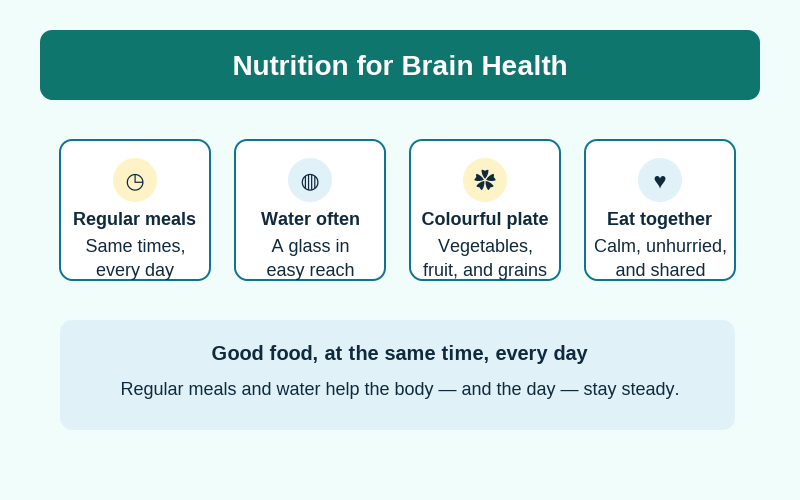
The simplest habit of all is keeping meals at the same times, every day. Breakfast at eight, lunch at twelve, dinner at six: the same times, at the same table, with the same simple pattern. When meals happen at the same times, your parent does not need to remember when to eat, because the time itself tells them. The morning light means breakfast. The afternoon quiet means tea. The evening dark means dinner. A regular rhythm also helps the body clock, which supports sleep, appetite, and mood, and it makes the day easier for everyone who helps with care, because the same plan works whoever is there.
Keep the pattern simple, and keep it steady, even on weekends, as far as you can. If a meal is late, keep the rest of the day in its usual order, so the day still has a familiar shape. If your parent forgets they have eaten, or asks for another meal, answer kindly and offer a small snack or a drink rather than arguing. If they forget to eat, a regular time and a familiar table are more helpful than reminders. Keep a short note of what was eaten and drunk, so you can tell a doctor if appetite or weight changes. Our guide to daily habits that support recall explains how a steady rhythm through the day supports memory too.
A Balanced Plate, Made Simple
A balanced plate does not need to be complicated. Think of it in simple terms: some vegetables or fruit, some protein, and some grains or bread, at each meal, with a drink of water. A colourful plate — green vegetables, orange carrots, red tomatoes, brown bread, white fish or chicken — is usually a balanced one, and it is easier to enjoy than a plate of one colour. Keep portions modest, and offer one course at a time, so your parent is not faced with too much food at once. If your parent follows a special diet for a medical reason, keep to it, and talk to a doctor if you are unsure.
Use familiar foods, and cook them in familiar ways. A person with dementia is more likely to eat a meal they recognise than a new dish, however healthy it is. If your parent has always eaten soup and bread for lunch, keep soup and bread for lunch. If they have always had a cooked breakfast on Sundays, keep it. Change one thing at a time, not everything at once. And remember that enjoyment matters as much as balance. A meal that is eaten with pleasure is worth more than a perfect meal that is left untouched. If your parent has a sweet tooth, a small pudding after a balanced meal is usually fine, and it gives them something to look forward to. Our guide to mealtime help and nutrition tips has more ideas for simple, familiar meals.
Hydration: Water, Often
Water is easy to forget, and easy to miss. A person with dementia may forget to drink, may not feel thirsty, or may avoid drinking because they worry about needing the toilet at night. But not drinking enough can cause confusion, tiredness, headaches, and constipation, and it can make dementia symptoms worse. The habit that prevents this is simple: keep a glass of water within reach all day, and offer drinks often. A glass on the table at meals, a bottle by the chair in the afternoon, a cup of tea in the evening: small, regular drinks, offered kindly, are better than a large glass forced at once.
Make drinking easy and pleasant. Use a favourite mug or glass, and keep it in the same place, so your parent knows where it is. Offer a variety: water, tea, diluted juice, soup, or a milky drink, depending on what your parent enjoys. Avoid very sugary drinks, and be careful with alcohol, which can make confusion worse and interact with medication — talk to a doctor if you are unsure. Keep a short note of how much your parent drinks, especially in hot weather, or if they have been unwell. If your parent is drinking very little, or if they seem confused, tired, or unwell, talk to a doctor promptly, because dehydration can have a medical cause that needs attention.
Shopping and Cooking Together
Shopping and cooking are good activities, because they are familiar, they have a clear result, and they give your parent a role in the home. Keep them simple. Write a short shopping list together, in large print, and take it with you. Buy the same familiar foods, from the same shop, on the same day each week, so the trip itself becomes a habit. In the kitchen, offer one small task at a time: washing vegetables, stirring a pot, setting the table, or tearing bread. Praise the effort, not the result, and stop before your parent becomes tired.
Keep the kitchen safe and easy to read. Label the cupboards, keep the most-used items at eye level, and keep the work surfaces clear. A simple step-by-step card on the wall can help with a familiar task: "Tea: 1. Fill the kettle. 2. Switch it on. 3. Put a tea bag in the mug. 4. Pour the water." If cooking has become unsafe, change the task, not the person: prepare simple meals together, or use foods that need little cooking. Our guide to creating memory aids around the home has more ideas for labels and simple tools in the kitchen, and our guide to supporting independence safely explains how to balance help and independence.
When Appetite Fades
Appetite often fades as dementia progresses, and that can be worrying for families. Your parent may eat less, refuse food, or say they are not hungry when they have not eaten for hours. There are many possible reasons: a change in taste, difficulty chewing or swallowing, pain, tiredness, low mood, or simply forgetting that it is time to eat. If appetite fades suddenly, or if your parent is losing weight, talk to a doctor promptly, because there may be a medical cause that needs attention, such as a sore mouth, a new medication, or an infection.
For a fading appetite, small, frequent meals are often better than three large ones. Offer a small plate, at the usual time, with familiar foods, and do not make a fuss if only half is eaten. A snack between meals — a piece of fruit, a biscuit, a small sandwich, a milky drink — can add up over the day. Make food easy to eat: soft foods, small pieces, and food that can be eaten with a spoon or with fingers, if cutlery has become difficult. Eat together, and eat the same food, so your parent is not singled out. And do not turn meals into a battle. A calm, unhurried meal, with no pressure, is worth more than a forced one. If swallowing becomes difficult, or if your parent coughs or chokes while eating, talk to a doctor promptly, because swallowing problems need medical advice.
A Calm Mealtime
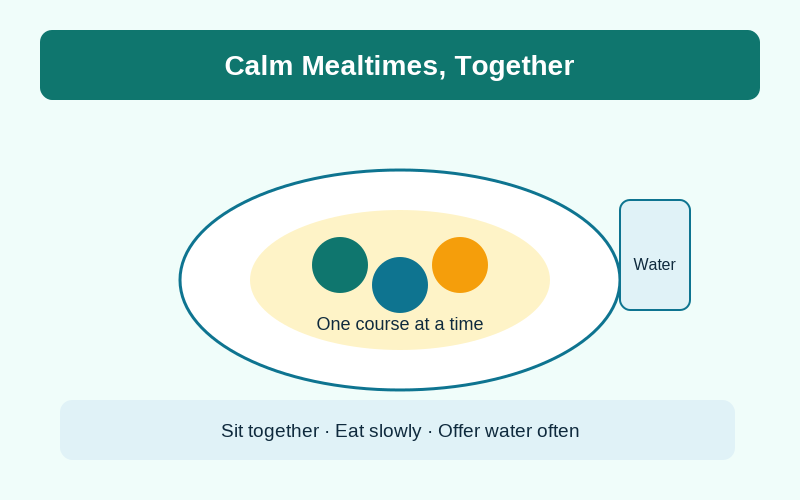
A calm mealtime is easier to enjoy, and easier to remember. Sit together, at the same table, at the same time, with the television off and the table clear. Eat slowly, and allow plenty of time. Do not rush, and do not talk about difficult subjects during a meal. A quiet conversation, or a favourite song playing softly, can make the meal more pleasant. Use the same plate, the same mug, and the same place at the table, so the meal feels familiar. If your parent becomes distressed during a meal, stay calm. Offer a drink, change the subject, or take a short break, and try again a little later.
Keep mealtimes short enough to be enjoyable. Twenty or thirty minutes is usually enough. If the meal drags on, your parent will become tired, and the food will go cold. Clear the table together, and then move on to the next part of the day: a short walk, a rest, or a favourite activity. A meal is not only about food. It is a habit that gives the day shape, and a moment of company that makes the day feel less lonely. Our guide to mealtime help and nutrition tips has more ideas for calm, safe mealtimes, and our guide to daily habits that support recall explains how regular meals support the whole day.
Snacks That Help
Snacks can be a useful part of the day, especially if appetite is small, or if your parent forgets to eat. Keep snacks simple, familiar, and easy to eat: a piece of fruit, a biscuit, a small sandwich, a yoghurt, a handful of nuts, or a milky drink. Keep them in the same place, where your parent can see them, and offer them at regular times: mid-morning, mid-afternoon, and before bed. A small snack, offered kindly, is often more welcome than a large meal, and it can add up to a good amount of food over the day.
Avoid keeping large amounts of very sweet or very salty snacks in the house, because they can fill your parent up without giving them the nutrition they need, and they can make thirst worse. If your parent has a medical condition that affects what they can eat, such as diabetes, talk to a doctor about suitable snacks, and keep to the advice given. And remember that snacks are not only about food. A cup of tea and a biscuit, shared together in the afternoon, is a pleasure in itself, and it gives the day a small, happy moment. Keep snacks simple, keep them regular, and keep them shared.
What to Keep in Mind
There is a great deal of advice about food and brain health, and much of it is confusing. The honest truth is simple: no single food, and no single diet, can prevent or cure dementia. A balanced, varied diet, with regular meals and enough water, is the best general advice, and it is the advice that doctors most often give. Be careful of products or diets that promise to improve memory, or to cure dementia, because those promises are not supported by good evidence, and they can be expensive, or even harmful. If you are considering a special diet, a supplement, or a change to what your parent eats or drinks, talk to a doctor first.
Be careful, too, with alcohol, which can make confusion worse, affect balance, and interact with medication. If your parent drinks alcohol, talk to a doctor about whether it is safe, and how much is safe. And be careful with salt and sugar, especially if your parent has high blood pressure or diabetes. None of this means food should become a source of worry. The goal is simple, everyday habits: regular meals, a colourful plate, water often, and calm mealtimes shared together. If you are worried about your parent's eating, drinking, or weight, talk to a doctor, and keep a short note of what was eaten and drunk, so you can describe it clearly.
Asking for Help With Food
You do not need to handle food and mealtimes alone. Other family members can help with shopping, cooking, or sharing a meal, and a regular arrangement — a daughter on Tuesdays, a neighbour on Saturdays — is better than asking for help at the last minute. A professional caregiver can help with shopping, cooking, or sitting with your parent at mealtimes, and a written plan, shared with everyone who helps, means the same routine works whoever is there. If mealtimes have become very difficult, or if your parent is losing weight, talk to a doctor, and ask whether a dietitian or another professional could help.
There is also help available from local services. Some areas have meal services, lunch clubs, or befriending services that can help with food and company. A lunch club can be a pleasure in itself, because it gives your parent a reason to go out, and a meal shared with other people. If you would like to explore professional help, read our guide to when to ask for extra help at home and our guide to questions to ask when choosing care support. You can also contact our team to talk through a specific situation in confidence.
Frequently Asked Questions
Is there a special diet for dementia? No single food or diet can prevent or cure dementia. A balanced, varied diet, with regular meals and enough water, is the best general advice. If you are considering a special diet, talk to a doctor first.
What if my parent will not eat? Offer small, frequent meals, with familiar foods, at the usual times, and do not turn meals into a battle. If appetite fades suddenly, or if your parent is losing weight, talk to a doctor promptly.
How much water should my parent drink? There is no single amount that suits everyone. Keep a glass of water within reach all day, offer drinks often, and talk to a doctor if you are worried about how much your parent is drinking, especially in hot weather or when unwell.
Can food help memory? Regular, balanced meals and enough water support energy, mood, sleep, and the ability to think clearly, but no food can restore lost memory. The best habits are simple ones: regular meals, a colourful plate, and water often.
When should I ask a doctor about eating or drinking? If appetite or weight changes suddenly, if swallowing becomes difficult, if your parent coughs or chokes while eating, or if they are drinking very little, talk to a doctor promptly. Only a doctor can assess eating, drinking, and nutrition.
Sources and Further Reading
This guide draws on the following sources, all accessed 29 November 2026.
- Alzheimer's Association — Facts and Figures, and information on dementia care at home. alz.org/alzheimers-dementia/facts-figures
- National Institute on Aging (NIA) — information on Alzheimer's disease, dementia, and caregiving. nia.nih.gov/health/alzheimers-and-dementia
If this guide helped you, please share it with another family who needs it, and read our other guides on dementia and memory care at home. If you would like to talk about care for your parent, start on our homepage or contact us — a friendly advisor is ready to listen, with no obligation. You can write to us at hello@homecare.biz.id.
Tags: memory care home care, senior nutrition, dementia care
Last reviewed: 29 June 2026. This guide is general information and is reviewed regularly. It is not a substitute for medical advice. Always talk to a doctor about diagnosis, treatment, or any change to care or medication.